Salary negotiations can sometimes feel daunting, especially in the fast-paced Salesforce job market. For professionals looking to advance their careers or secure new opportunities, understanding how to negotiate their Salesforce salary effectively is crucial. This guide provides insights into current market trends and strategies to help you achieve the compensation you deserve.

Understanding the Salesforce Job Landscape

Before entering negotiations, get a clear picture of the current Salesforce job market. Demand for Salesforce talent remains robust, but roles and pay levels are widely based on location, skill set, certifications, and industry.

  • Remote roles have opened doors to opportunities previously limited by location.
  • Certifications such as Salesforce Administrator, Platform Developer, and Architect significantly enhance your marketability and earning power.
  • Industry verticals (e.g., healthcare, financial services) may pay a premium for experience in specific domains or with industry-focused Salesforce clouds.

Research Salesforce Salary Ranges

To set realistic expectations, consult recent salary surveys and job boards. Leading platforms such as Mason Frank, Salesforce Ben, and Glassdoor provide benchmarks for various Salesforce positions across regions and experience levels. In 2025, a Salesforce Admin’s average salary ranges anywhere from $70,000 to $120,000 in the US, while Developers and Architects can earn significantly more based on certifications and specialized expertise.

Preparing for the Negotiation

Preparation is the foundation of every successful negotiation. Here’s how to position yourself for success:

  1. Assess Your Value

    Take stock of the following:

  • Certifications: Each additional credential typically lifts your salary potential.
  • Experience: Years in the ecosystem and proven project delivery weigh heavily.
  • Specializations: Industry-specific or advanced expertise can command premium pay.
  • Soft Skills: Leadership, client management, and training abilities add to your perceived value.
  1. Research and Benchmark

    Start by gathering data on typical salaries for roles similar to yours. Consider factors like company size, industry, and the specific responsibilities of the position. For example, a Salesforce Administrator in a large enterprise might get a different Salesforce salary than one in a small startup.

  2. Define Your Target Salary

    Determine a realistic and well-researched salary range you’re comfortable with. This range should include your ideal figure, a negotiable minimum, and a stretch goal. Being clear about your financial expectations helps you stay focused during the negotiation process.

  3. Practice Your Pitch

    Rehearse how you’ll articulate your value and your salary expectations. This isn’t about memorizing a script, but about feeling confident and comfortable discussing your worth. Anticipate potential objections and prepare thoughtful responses.

Key Salesforce Salary Negotiation Strategies

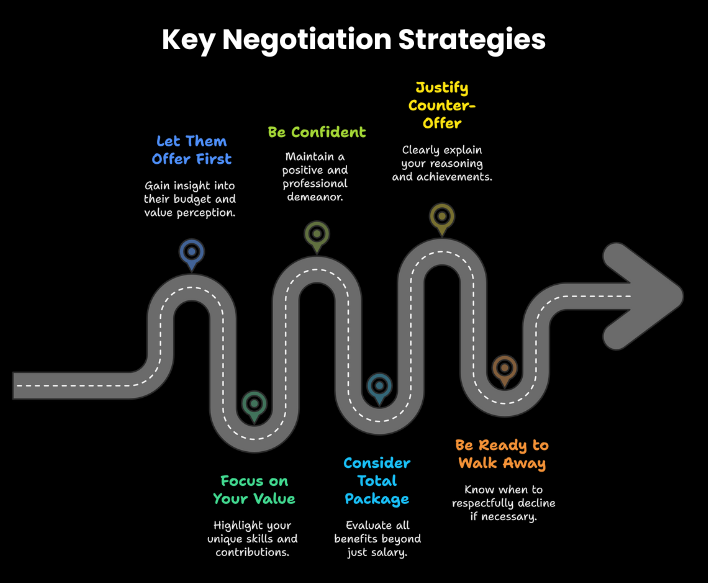
Key Negotiation Strategies

Once you’ve done your homework, it’s time to put your negotiation skills to the test.

  1. Let Them Make the First Offer (If Possible)

    While not always feasible, allowing the employer to present the initial offer can give you valuable insight into their budget and perceived value of the role. This puts you in a better position to counter-offer.

  2. Focus on Your Value, Not Just Your Needs

    Shift the conversation from what you need to what you bring to the table. Emphasize your unique skills, experiences, and how you will solve their problems and contribute to their success. Frame your request for a higher Salesforce salary in terms of your increased value.

  3. Be Confident and Professional

    Approach the negotiation with a confident yet respectful behavior. Maintain a positive attitude, even if the initial offer isn’t what you hoped for. Avoid ultimatums or aggressive tactics, as this can damage the professional relationship.

  4. Don’t Just Focus on Base Salary

    Remember that compensation packages often include more than just a base salary. Consider bonuses, stock options, health benefits, professional development opportunities, and work-life balance perks. Sometimes, a lower base Salesforce salary can be offset by a robust benefits package or significant growth potential.

  5. Justify Your Counter-Offer

    If you counter an offer, clearly explain your reasoning, backed by your research and quantified achievements. Be prepared to articulate why your requested Salesforce salary is justified.

  6. Be Ready to Walk Away (Respectfully)

While it’s not ideal, sometimes walking away is the best option if the offer doesn’t reflect your value. This is especially true if:

  • The role demands more responsibility than advertised
  • The Salesforce salary is significantly below the market
  • There’s little flexibility in benefits or growth opportunities

Express your gratitude and leave the door open:

“I truly appreciate the offer and enjoyed our conversations. However, after careful consideration, I don’t believe the current package aligns with my market value and career goals. I’d be happy to stay in touch for future opportunities.”

Post-Negotiation Best Practices

Once an agreement is reached, ensure everything is documented.

  1. Get It in Writing

    Always ensure that the agreed-upon Salesforce salary and entire compensation package are detailed in a written offer letter before you formally accept. Review it carefully to ensure accuracy.
  2. Maintain Professionalism

    Regardless of the outcome, maintain a professional and positive relationship with the hiring team. The Salesforce ecosystem is tight-knit, and maintaining a good reputation is essential for future opportunities.

Additional Tips for Salesforce Professionals

  • Keep Certifications up to Date: A newly earned certification can serve as a lever for a mid-year salary review.
  • Network with other Salesforce Pros: Learn negotiation stories, current rates, and winning tactics in the Trailblazer Community and local user groups.
  • Document Achievements: Track your impact on previous projects—ideally with metrics that show business value—for future negotiations.

Final Thoughts

Negotiating your Salesforce salary is an art and a science. By understanding the market, preparing thoroughly, and employing effective strategies, you can significantly increase your chances of securing the compensation that reflects your true value in the Salesforce job market.

Mark Jacobes

Mark Jacobes is a seasoned Salesforce expert, passionate about empowering businesses through innovative CRM solutions. With over 6 years of experience in the Salesforce ecosystem, Mark specializes in Salesforce development, integrations, and digital transformation strategies.

Share.
Leave A Reply

Exit mobile version