

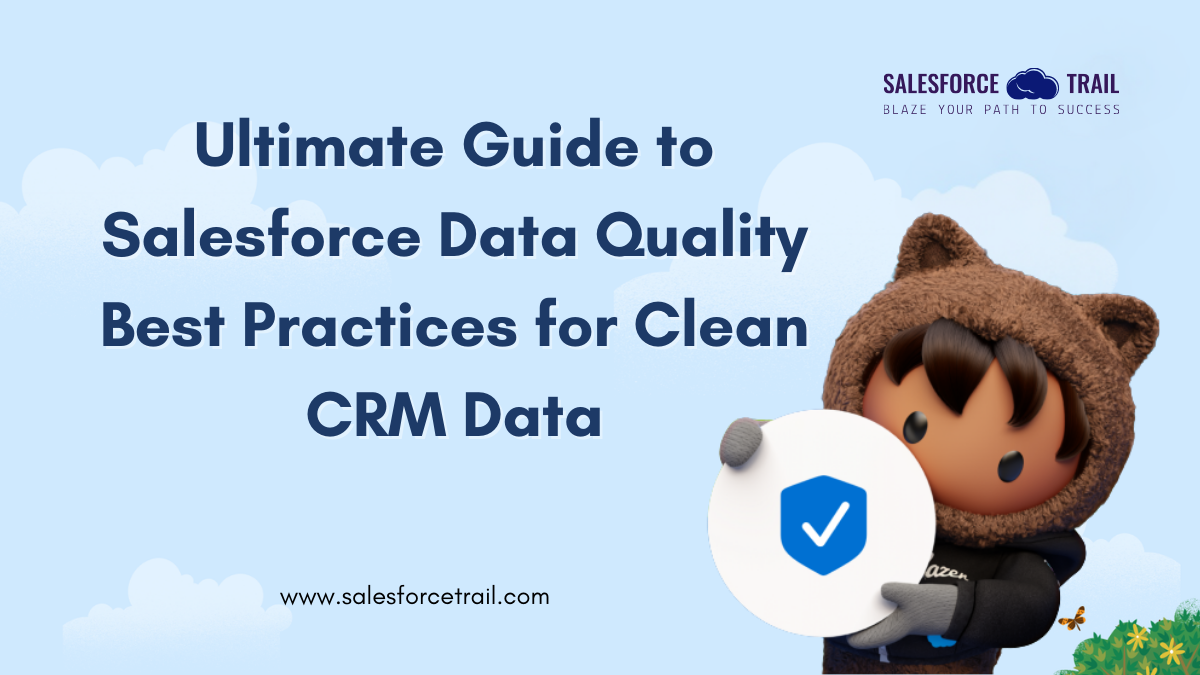
In the Salesforce ecosystem, data is more than just records—it’s the foundation of decision-making, customer engagement, and business growth. Yet, many organizations underestimate the importance of maintaining clean, consistent, and reliable data. Without proper controls, Salesforce orgs can quickly become cluttered with duplicates, outdated information, and incomplete records, making it difficult for teams to extract meaningful insights.
This guide explores the Salesforce Data Quality Best Practices every professional should adopt to ensure their CRM data remains accurate and trustworthy.
Why Salesforce Data Quality Matters
High-quality data is the backbone of every Salesforce implementation. When records are accurate, complete, and consistent, teams can trust the CRM as their single source of truth. On the other hand, poor Salesforce data quality creates ripple effects across the business—duplicate leads waste sales reps’ time, missing fields break automation, and outdated information leads to flawed forecasts. These issues don’t just frustrate users; they directly impact revenue, customer satisfaction, and decision-making.
Research indicates that organizations lose millions of dollars annually due to poor data, often without fully understanding the true cost. By focusing on data quality, businesses can enhance pipeline visibility, strengthen reporting, and deliver more effective customer experiences. In short, clean CRM data isn’t optional—it’s a strategic advantage for long-term growth.
Core Salesforce Data Quality Best Practices
Establish Clear Data Governance
A strong data governance framework is the foundation of quality. This involves:
- Defining ownership: Assign responsibility for different data domains (e.g., Sales Ops for leads, Marketing for campaigns).
- Standardizing processes: Ensure everyone follows the same rules for data entry and updates.
- Documenting policies: Create clear guidelines for naming conventions, required fields, and update frequency.
Governance provides accountability and prevents data from becoming fragmented across teams.
Leverage Validation Rules for Accuracy
Validation rules are one of the most effective tools for ensuring correct data entry in Salesforce. They prevent users from saving incomplete or invalid records by enforcing conditions.
Examples include:
- Requiring a phone number for every lead.
- Preventing opportunities from being closed without a close date.
- Enforcing industry picklist values to avoid free-text errors.
By proactively stopping errors at the point of entry, validation rules reduce cleanup efforts downstream.
Use Duplicate Management and Matching Rules
Duplicate records are one of the biggest challenges in maintaining Data Quality. Salesforce provides Duplicate Rules and Matching Rules to detect and prevent duplicates in leads, contacts, and accounts.
Best practices include:
- Creating custom matching logic for your business (e.g., email + phone for leads).
- Setting duplicate rules to block creation or alert users in real time.
- Running regular deduplication jobs to clean up historical records.
This ensures sales reps are not chasing the same lead twice and that reporting remains reliable.
Implement Required Fields Strategically
While it’s tempting to make every field mandatory, too many required fields frustrate users and may lead to incorrect data entry. Instead:
- Identify the truly essential fields (e.g., email, company name, opportunity stage).
- Use page layouts and record types to control which fields are required in specific contexts.
- Consider dynamic forms and conditional visibility to streamline the experience.
Balancing user experience with data quality helps adoption while maintaining accuracy.
Regularly Audit and Cleanse Data
Even with the best preventive measures, data decay is inevitable. Contacts change roles, companies rebrand, and phone numbers expire. To maintain Salesforce Data Quality:
- Schedule data audits to identify outdated or incomplete records.
- Use Salesforce Reports and Dashboards to track missing or inconsistent fields.
- Leverage third-party tools or integrations for enrichment and validation (e.g., validating email addresses).
A proactive approach ensures your CRM remains a trusted source over time.
Automate Data Quality with Flows and Apex
For larger orgs, automation plays a critical role. Salesforce Flow and Apex can be used to enforce business logic beyond what validation rules cover.
Examples include:
- Flows that auto-populate related fields when a record is created.
- Apex triggers that enforce complex conditions or maintain data integrity across objects.
- Scheduled jobs that automatically archive or update stale records.
Automation not only improves consistency but also reduces manual effort.
Monitor Data with Reporting and Dashboards
Visibility is key to maintaining long-term quality. By building data quality dashboards, you can monitor metrics like:
- Percentage of records missing critical fields.
- Number of duplicate records detected over time.
- Data accuracy by team or region.
These dashboards help leaders identify problem areas quickly and hold teams accountable.
Train and Educate Users
Even with automation and rules in place, users remain the first line of defense for Salesforce Data Quality. Training is essential to build awareness and adoption.
- Provide short guides on proper data entry.
- Encourage teams to report data issues proactively.
- Recognize users who consistently maintain clean data.
When users understand the “why” behind data quality, they are more likely to follow best practices.

Final Thoughts
Maintaining clean CRM data is an ongoing process, not a one-time project. By combining governance, automation, preventive controls, and regular audits, Salesforce professionals can ensure that their org remains a reliable source of truth for the business.
Adopting these Salesforce Data Quality Best Practices not only improves reporting accuracy but also enhances efficiency, reduces operational costs, and creates better customer experiences.


Most Reads:
- How to Become a Salesforce Consultant: A Complete Guide to Success
- How to Become a Salesforce Solution Architect: A Complete Guide to Success
- Best Tips and Tricks to Ace Your Salesforce Interviews in 2025
- Dreamforce 2025 Registration is Open Now: Everything You Need to Know
- How to Crack the Salesforce Interview: Real Questions and Tips from Experts
Resources
- [Salesforce Developer]- (Join Now)
- [Salesforce Success Community] (https://success.salesforce.com/)
For more insights, trends, and news related to Salesforce, stay tuned with Salesforce Trail

Mark Jacobes is a seasoned Salesforce expert, passionate about empowering businesses through innovative CRM solutions. With over 6 years of experience in the Salesforce ecosystem, Mark specializes in Salesforce development, integrations, and digital transformation strategies.