

In today’s digital world, businesses handle vast amounts of data that drive decision-making, improve customer experiences, and enhance operational efficiency. Salesforce Data Cloud offers businesses a robust platform for data management and analysis. However, without proper Data Governance and Security measures, businesses risk data breaches, compliance violations, and loss of trust.
This blog explores best practices for ensuring Data Governance and Security in Salesforce Data Cloud, making it easy to understand even for those new to the topic.
Understanding Data Governance and Security
What is Data Governance?
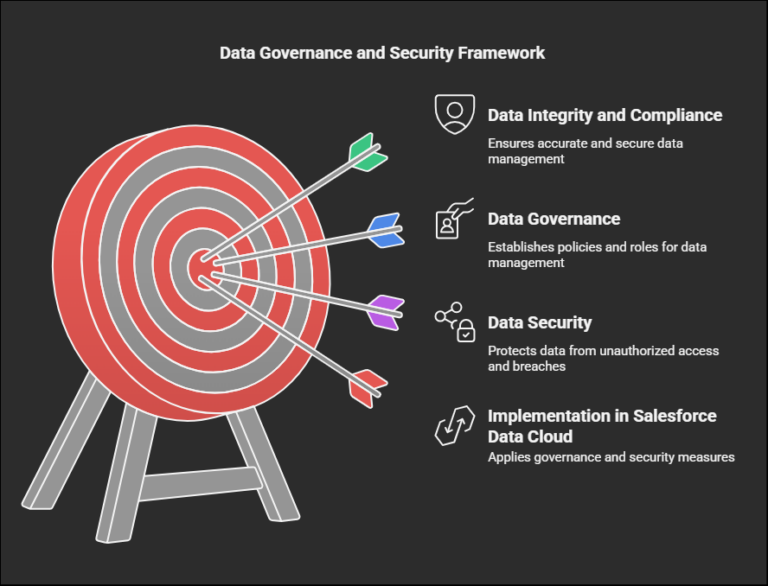
Data governance involves setting up policies, procedures, and standards to ensure data is accurate, consistent, and accessible to authorized users. It defines roles and responsibilities to manage data efficiently and securely.
What is Data Security?
Data security focuses on protecting data from unauthorized access, breaches, or corruption. It includes encryption, access controls, and compliance measures to safeguard sensitive information.
Properly implementing Data Governance and Security in Salesforce Data Cloud guarantees data integrity, minimizes risks, and assists businesses in adhering to industry regulations.
Best Practices for Data Governance in Salesforce Data Cloud
Assign Clear Data Ownership and Responsibilities
Every data set should have an assigned owner responsible for its accuracy and security. Establishing clear ownership ensures accountability and helps maintain high-quality data.
Set Data Quality Standards and Validation Rules
Inconsistent or inaccurate data can lead to poor business decisions. Utilize Salesforce’s built-in validation rules, duplicate management tools, and automated workflows to maintain high-quality data.
Implement Data Classification for Better Protection
Classify data based on sensitivity levels such as public, internal, confidential, or restricted. This ensures appropriate security measures are applied depending on data sensitivity.
Maintain Compliance with Industry Regulations
Ensure that your Salesforce Data Cloud implementation adheres to regulations like GDPR, CCPA, and HIPAA. Use Salesforce Shield and Audit Trail features to maintain compliance and monitor data access.
Regularly Audit and Monitor Data Usage
Perform routine audits to track data access, modifications, and sharing activities. Salesforce’s Event Monitoring tools help detect unusual patterns and prevent potential security threats.
Best Practices for Data Security in Salesforce Data Cloud
Restrict Access with Role-Based Controls
Use Role-Based Access Control (RBAC) to limit user access to only necessary data. Configure Salesforce Profiles, Permission Sets, and Sharing Rules to prevent unauthorized access.
Implement Multi-Factor Authentication (MFA)
Improve security by implementing a multi-factor authentication process before allowing access. Enabling MFA reduces the risk of compromised accounts and unauthorized access.
Encrypt Sensitive Data for Maximum Security
Encryption makes sure that data stays unreadable, even if someone accesses it without permission. Use Salesforce Shield Platform Encryption to protect confidential customer and financial information.
Perform Regular Data Backups and Recovery Planning
Unexpected incidents like cyberattacks or system malfunctions can result in data loss. To prevent this, set up automated backup plans with Salesforce’s Data Recovery Services or use third-party options.
Educate Employees on Data Security Practices
Human error is one of the most common causes of security breaches. Conduct regular training sessions to educate employees on best practices for data protection, including recognizing phishing scams and using strong passwords.
Key Benefits of Strong Data Governance and Security Measures in Salesforce
Minimize Cybersecurity Risks and Protect Business Reputation
A well-secured data environment prevents unauthorized access, reduces breach risks, and strengthens trust with customers, partners, and stakeholders.
Improve Data Accuracy and Enable Smarter Decision-Making
Clean, well-governed data allows businesses to generate reliable insights and make informed strategic decisions, ultimately improving performance and growth.
Enhance Customer Trust and Strengthen Long-Term Business Relationships
When businesses prioritize Data Governance and Security, customers feel confident that their personal and financial data is in safe hands, leading to higher retention rates.
Ensure Regulatory Compliance and Avoid Legal Consequences
Non-compliance with data protection laws can result in heavy fines and reputational damage. Strong governance ensures businesses remain compliant, reducing legal risks.
Optimize Business Operations and Boost Efficiency
A well-structured data governance framework streamlines workflows, eliminates redundant data, and enhances collaboration leading to increased operational efficiency.

Final Thoughts
Salesforce Data Cloud offers businesses a powerful way to manage vast amounts of data, but without proper Data Governance and Security data can become a liability. By implementing best practices such as role-based access control, encryption, compliance monitoring, and regular audits, businesses can protect their data, ensure regulatory compliance, and foster customer trust.
Taking proactive steps today will help secure data for the future, ensuring organizations maximize the full potential of Salesforce Data Cloud.
Must Visit Links:
- How I Passed the Salesforce Data Architect Exam on My First Attempt
- How to Start Your Salesforce Career as a Beginner 6 Months Full Proof Plan
- Salesforce Marketing Cloud Career Path in 2025: Your Complete Beginner’s Guide
- Agentblazer vs Trailblazer: What’s the Key Difference?
- How to Prepare for the Certified Agentforce Specialist Certification Exam
Resources
- [Salesforce Developer]- (https://developer.salesforce.com/)
- [Salesforce Success Community] (https://success.salesforce.com/)
For more insights, trends, and news related to Salesforce, stay tuned with Salesforce Trail

Mark Jacobes is a seasoned Salesforce expert, passionate about empowering businesses through innovative CRM solutions. With over 6 years of experience in the Salesforce ecosystem, Mark specializes in Salesforce development, integrations, and digital transformation strategies.
- Mark Jacobes