

Salesforce offers multiple industry-specific solutions, and two of the most commonly compared platforms today are Life Sciences Cloud (LSC) and Health Cloud. Although both sit within the healthcare and life sciences ecosystem, they serve very different audiences and business workflows.

This guide breaks down Life Sciences Cloud vs Health Cloud with practical explanations, diagrams, hidden truths most admins don’t discuss, and real Salesforce UI references.

Table of Contents

What is Life Sciences Cloud (LSC)?

Life Sciences Cloud is Salesforce’s next‑gen platform built specifically for pharmaceutical, biotech, and med‑tech organizations.

Key Capabilities

  • Omnichannel engagement for HCPs
  • Medical affairs workflows
  • Clinical operations & trial management
  • Territory and field force planning
  • Compliance-driven interactions

Target Users

  • Medical reps / MSLs
  • Compliance teams
  • Clinical operations
  • Marketing teams in pharma/biotech

What is Health Cloud?

Health Cloud focuses on the provider–patient relationship.

Key Capabilities

  • Care plan management
  • Patient timeline & care gaps
  • Provider network & householding
  • EMR interoperability
  • Care team administration

Target Users

  • Hospitals & clinics
  • Care managers
  • Coordinators & providers
  • Payers using Health Cloud extensions

Life Sciences Cloud vs Health Cloud: High-Level Comparison

1. Purpose & Industry Fit

FeatureLSCHealth Cloud
Primary FocusLife Sciences (Pharma, MedTech, Biotech)Healthcare Providers & Payers
Designed ForHCP interactions, clinical ops, compliant communicationCare management, patient engagement
Data ModelProduct-centric + HCP-centricPatient-centric + Provider-centric

2. Data Models (Illustration)
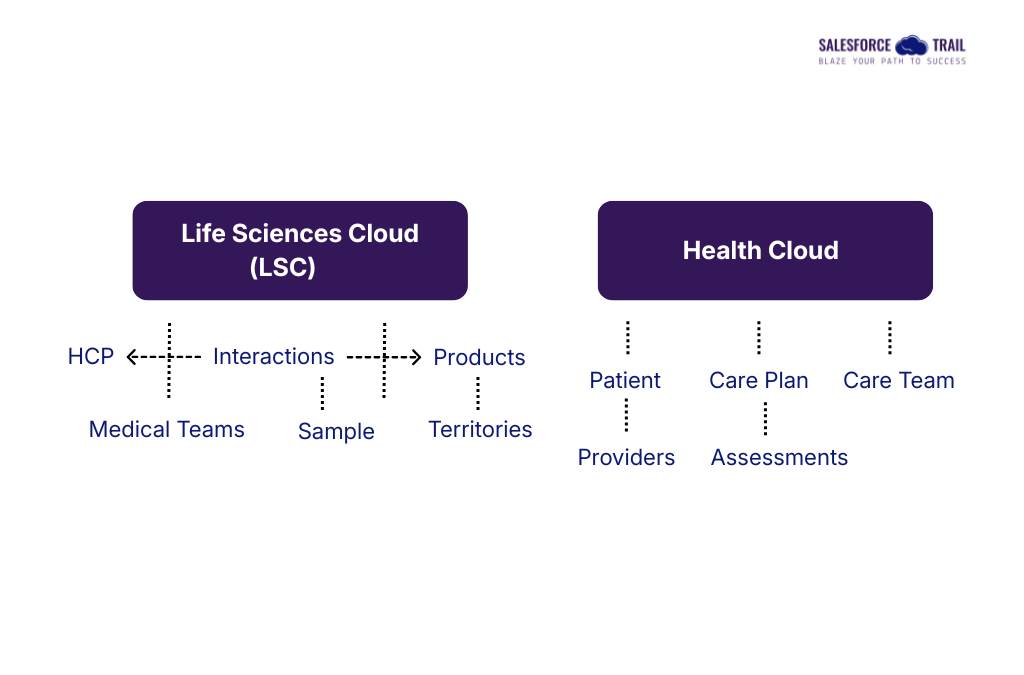
Data Models (Illustration)

Deep Dive: Feature-by-Feature Analysis

1. Engagement Model

  • LSC: Focused on compliant HCP engagement, samples, and medical inquiries.
  • Health Cloud: Focused on patients, clinical journeys, and care gaps.

2. Regulatory Alignment

  • LSC: Built for FDA, EMA, Sunshine Act requirements.
  • Health Cloud: HIPAA-focused for patient data safety.

3. Integrations

  • LSC: Veeva replacements, CTMS, RIM, safety systems.
  • Health Cloud: EMR/EHR, ADT feeds, HL7/FHIR.

Salesforce UI Mockups

LSC Medical Inquiry Workspace (Mockup)
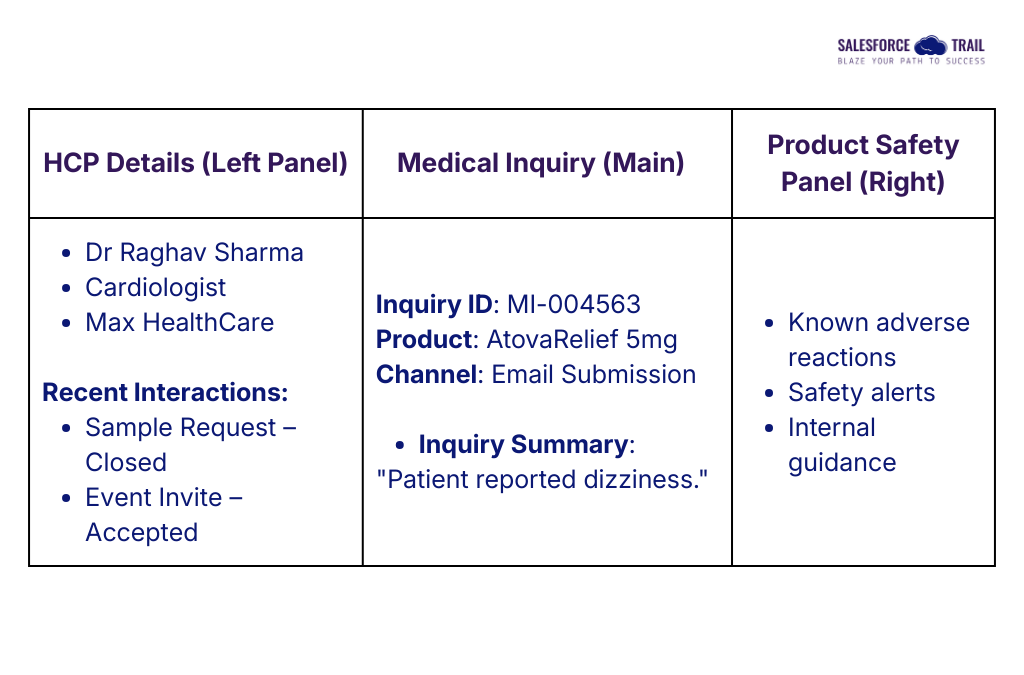
LSC Medical Inquiry Workspace (Mockup)

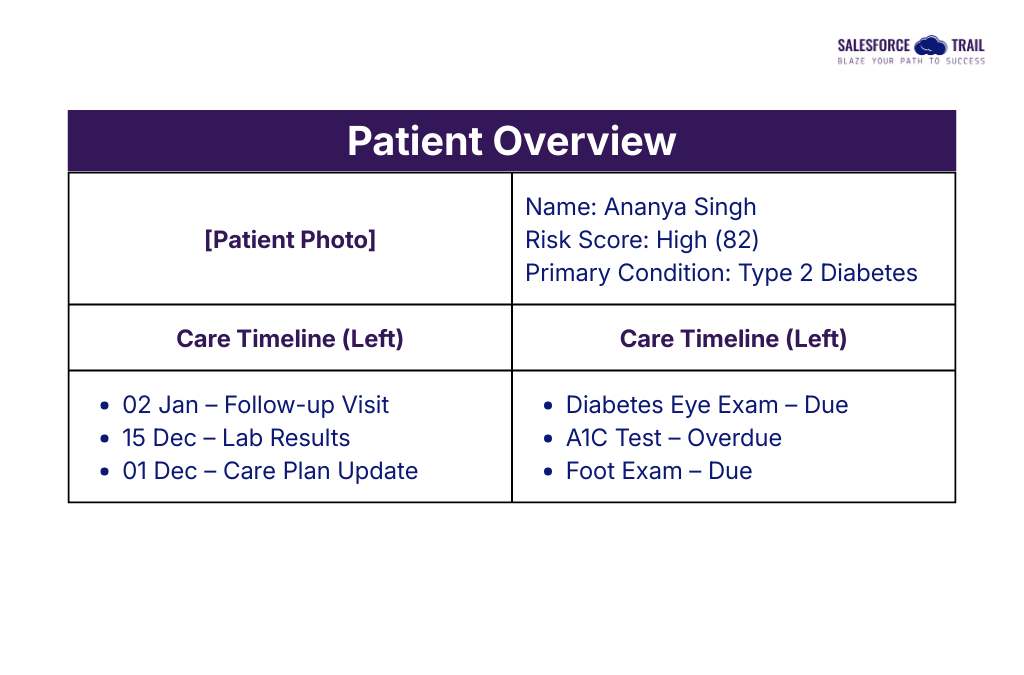
Health Cloud Patient Console (Mockup)Health Cloud Patient Console (Mockup)
Architecture Diagram (Text Illustration)
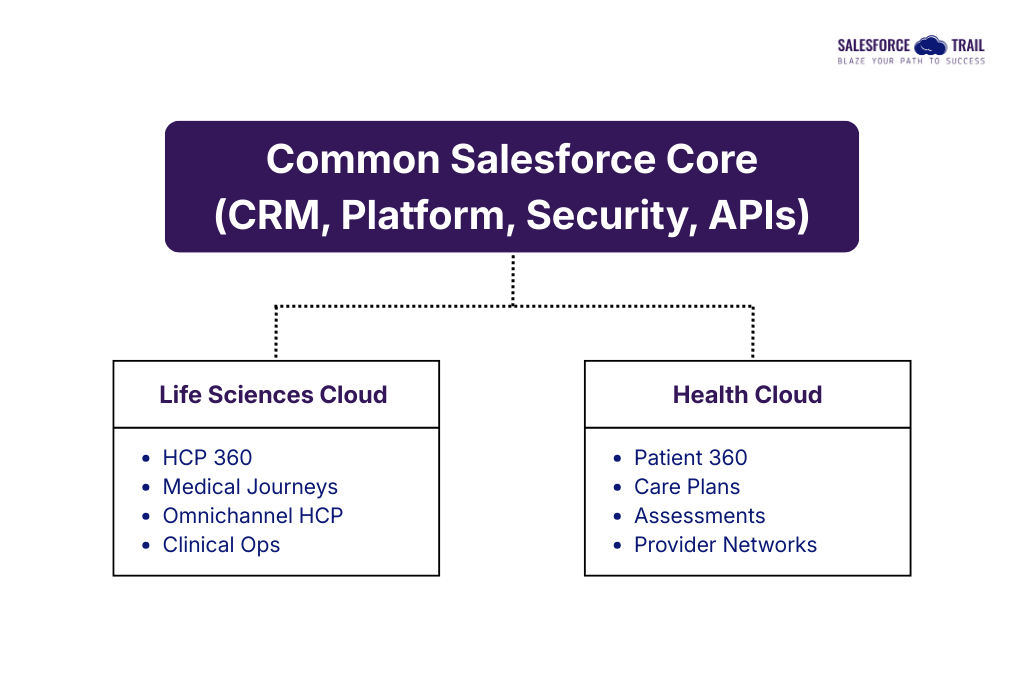
Architecture Diagram (Text Illustration)

The Hidden Truths (No One Tells You)

1. LSC is NOT Health Cloud for pharma.

They share the same underlying platform but zero functional overlap.

2. Health Cloud is not meant for field reps.

Although you can customize it, the standard UX is 100% patient-focused.

3. LSC is more expensive.

It bundles advanced modules like Medical, Clinical, and Omnichannel.

4. Customization Effort Differs.

  • LSC has more prebuilt pharma workflows → less customization.
  • Health Cloud often needs customization for care teams and EMR alignment.

5. LSC Roadmap is Faster.

Salesforce invests more aggressively in LSC because of the pharma market’s growth.

When to Choose What?

Choose LSC if:

  • You work with HCPs, not patients.
  • You manage samples, events, or medical content.
  • Omnichannel compliant engagement is required.

Choose Health Cloud if:

  • You manage patients, members, or clinical journeys.
  • You need EMR/EHR integrations.
  • You run care programs or provider networks.

Conclusion

LSC and Health Cloud often get compared because they both operate in healthcare, but they are fundamentally designed for different user groups and use cases. Choosing the right cloud requires mapping your industry vertical, engagement model, and regulatory needs to the correct platform.

Abhishek Gupta (Salesforce Trail)
Abhishek Gupta
Senior Technical Consultant  abhishekgupta2@salesforce.com

Abhishek (STC @Salesforce) is a Salesforce professional with hands-on experience in Health Cloud, Enterprise Territory Management, and scalable Salesforce architecture. He has worked on designing territory models, access strategies, and healthcare-focused solutions that align business needs with platform best practices. Passionate about continuous learning, Abhishek enjoys sharing practical Salesforce insights through blogs and community contributions to help others build efficient, real-world implementations.
Share.
Leave A Reply

Exit mobile version